
RIIS and HIPS Celebrate a Decade of Partnership, Research, and Community Impact
June 17, 2026

The Institute of Human Virology's (IHV) Research Initiative in Infectious Diseases and Substance Use (RIIS) marked a significant milestone in 2026, celebrating 10 years of partnership with HIPS, a Washington, D.C.-based nonprofit dedicated to reducing harm and improving the lives of people affected by substance use, HIV, and structural inequities.
Since launching their collaboration in 2016, RIIS and HIPS have built a nationally recognized model that integrates clinical care, community engagement, and cutting-edge research directly within a trusted community setting. By embedding care and research where patients already receive services, the partnership has expanded access to healthcare for underserved populations while generating evidence that is helping shape HIV prevention, infectious disease treatment, and substance use care nationwide.
To commemorate the anniversary, RIIS and HIPS hosted a celebration on June 11, 2026, at the HIPS clinic in Washington, D.C. The event brought together RIIS investigators and staff, HIPS leadership and employees, patients, collaborators from the University of Maryland, College Park, and representatives from the National Institutes of Health (NIH), whose support has been instrumental in advancing the program's mission.
Over the past decade, the RIIS clinic at HIPS has delivered an extraordinary level of care to the community. Since opening, the clinic has served 831 unique patients and completed more than 17,100 clinic visits, reflecting sustained engagement with individuals who often face significant barriers to healthcare.
Beyond patient care, the partnership has become a powerful platform for clinical research. Together, RIIS and HIPS have launched a series of NIH-supported studies addressing HIV, hepatitis C, opioid and polysubstance use, HPV, and innovative approaches to peer-delivered interventions. These studies have helped advance understanding of HIV transmission networks, integrated hepatitis C and opioid use disorder treatment, long-term health outcomes among people who use drugs, vaccine responses, and strategies to improve engagement in HIV prevention and treatment.
Current and completed studies include:
GRAVITY (2016): Mapping HIV and hepatitis C transmission networks through geospatial and phylogenetic analysis.
ANCHOR (2017): Integrating hepatitis C treatment with opioid use disorder care to reduce HIV risk.
LOOP (2020): A long-term observational study examining health outcomes among people who use opioids.
PATCH (2021): Characterizing the health needs and barriers to care for transgender individuals living with or at risk for HIV.
GEMS (2024): Studying health outcomes among people receiving gender-affirming hormone therapy who are living with or at risk for HIV or HPV.
SUDS (2024): Evaluating substance use patterns and health outcomes in the Washington, D.C., and Maryland region.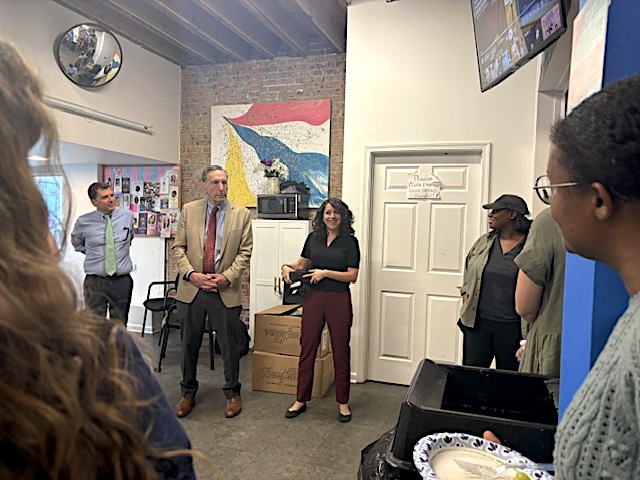
PUSH (2025): Testing peer-delivered behavioral interventions to improve adherence to long-acting HIV prevention and treatment.
STAC (2025): Evaluating the safety and tolerability of semaglutide among adults with cocaine use disorder, with and without HIV.
PROTECT (2025): Assessing immune responses to HPV vaccination in people living with and without HIV.
PRISM (2026): Investigating peer recovery strategies and telemedicine to improve retention in care for people with opioid and polysubstance use disorders.
The RIIS-HIPS partnership demonstrates the impact that can be achieved when academic medicine and community organizations work together toward a shared goal. By combining compassionate, patient-centered care with innovative clinical research, the collaboration has improved access to healthcare, expanded scientific knowledge, and created opportunities for individuals who have historically been underrepresented in research.
As RIIS enters its second decade at HIPS, the program remains committed to advancing research that is informed by community needs while continuing to provide high-quality clinical care for some of the region's most vulnerable populations. The past ten years stand as a testament to the strength of this partnership and its lasting impact on both patients and public health.
Contact
jennifer.gonzales@ihv.umaryland.edu