
Orthopedics This Week: Could A Virus Eradicate Peri-Prosthetic Biofilm Infections?
June 01, 2022 | Elizabeth Hofheinz, MPH, MED
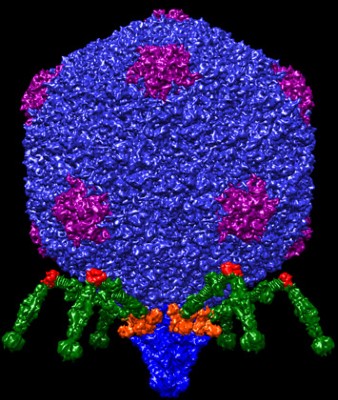
Could bacteriophage therapy—the practice of using viruses to treat bacterial infections—prove as or more effective than the current standard of care for eradicating biofilm infections?
A research team from the University of Maryland looked at that exact question and the results of their study: “Assessment of Staphylococcal Clinical Isolates from Periprosthetic Joint Infections for Potential Bacteriophage Therapy,” has just been published in the April 20, 2022, edition of The Journal of Bone and Joint Surgery.
Co-author James Doub, MD, Assistant Professor of Medicine and Director of Ambulatory Infectious Diseases at the University of Maryland School of Medicine's Institute of Human Virology, explained this interesting approach to OTW. “Bacteriophage therapy is a novel therapeutic that utilizes the power of viruses to lyse bacteria. This therapy holds promise in the treatment of periprosthetic joint infections [PJI] given these therapeutics have innate abilities to eradicate biofilm and self-replicate.”
“However, many aspects of this therapeutic are not well understood, leading to poorly reproducible outcomes. In addition, this causes bacteriophages to be used similar to antibiotics, but these agents are very different than conventional antibiotics in many ways. Consequently, knowledge about how a bacteriophage therapeutic’s activity can differ between bacterial phenotypes (planktonic versus sessile) is paramount to thereby create effective and reproducible therapeutics.”
Contact
Vanessa McMains
Director, Media & Public Affairs
Institute of Human Virology
University of Maryland School of Medicine
443-875-6099
vmcmains@ihv.umaryland.edu